
I read with interest an article in the Wall Street Journal this morning concerning people’s perceived wait times in the retail environment. It seems guru Paco Underhill timed shoppers in line with a stopwatch to determine how real wait times compared with how long shoppers felt they had waited.
Up to about two to three minutes, the perception of the wait was pretty accurate, but after three minutes, the perceived wait time multiplied with each passing minute. In other words, if a person actually waited 5 minutes, their perception was they had waited 10. Interesting.
Though we technically don’t make people wait in line, many times, they do have to wait. Based on this research, the longer they wait, the even greater time they will have perceived they waited. Heck, I have witnessed clients not even be greeted in 3 minutes.
What’s a savvy leasing professional to do?
First, understand that while lease paperwork needs to be finished, every second you spend focusing on that, rather than the customer waiting in the lobby, negatively impacts perception.
The paperwork will wait. You are paid to converse with people and lease apartments. Get to it.
Second, reality dictates no matter how good you are, sometimes people will have to wait. Provide something for them to do. Show a movie in your clubhouse, have current newspapers and periodicals available, (make sure there is something for every interest), and give your clients an indication of exactly how long the wait will be. Make it their choice by making them feel comfortable, but also offering an alternative appointment time. They will let you know which they prefer. Offer a beverage, or better yet, provide a Starbucks card and send them off for coffee, assuring you will be ready for them when they get back.
Most important, (this one is for managers and bookkeepers and individuals that do not perceive themselves as leasing professionals), never ever ever pass off a client with the, “The leasing professional is out right now, have a seat and she will be with you in a moment” line. When is the last time you were OK with being “passed off”. The people in front of you are most important and there isn’t a faster way to turn somebody off than to throw that line at them and return to your desk to do the really important work.
Three minutes. After that, the perceived wait doubles with every minute. Don’t make them wait.
Showing posts with label Marketing. Show all posts
Showing posts with label Marketing. Show all posts
Thursday, December 8, 2011


Thursday, May 12, 2011
How Did I Find You? First I Went Here...Then There...
As a testament to just how interesting it can be to figure out how people find you, I was reviewing my morning HARO via email this week, (it’s a service that connects reporters with sources qualified to talk about a subject), and read Peter Shankman’s blurb on a nifty new source called iwearyourshirt.com. Interesting, I thought - let’s check it out. And indeed, the site has some great marketing potential for “getting the word out’ about your brand. In my quest for information, I scrolled down to “recent videos” and saw a brand called “call-em-all” being promoted, among other things, as a tool for property management. “Hmmm,” I thought, “That’s my gig - I should check it out.”
I was directed to a YouTube video where an everyday guy wearing a call-em-all t-shirt told me all about how my residents would benefit, and my life would be made easier by automatically calling or texting every phone number on my list to notify residents of community events, (“Don’t forget, the pool party is tomorrow - bring a friend!”), announcements, (“You will have no water for the next 2 hours”), and pretty much anything you would need to let everyone know. Pretty cool. From YouTube, you know I then clicked on the call-em-all website to take a better look. Pricing is based on numbers in plan, so, for example, if you have 500 numbers, (250 apartments) the cost is $95 per month. The time and effort saved in copies, delivery and traditional strategies might be worth it, and...it’s immediate. Love that. So will the residents.
So there you have it. Email (HARO) to iwearyourshirt.com to YouTube to call-em-all.
Now, to continue the circle of life, if call-em-all is monitoring and effectively managing their online reputation, they will see my post, see that I talked about their product, be forever grateful for continuing the chain and send me a t-shirt. Which I will put on, take a picture of, and blog about.
Welcome to advertising in the here and now. That’s what everybody’s talking about.
I was directed to a YouTube video where an everyday guy wearing a call-em-all t-shirt told me all about how my residents would benefit, and my life would be made easier by automatically calling or texting every phone number on my list to notify residents of community events, (“Don’t forget, the pool party is tomorrow - bring a friend!”), announcements, (“You will have no water for the next 2 hours”), and pretty much anything you would need to let everyone know. Pretty cool. From YouTube, you know I then clicked on the call-em-all website to take a better look. Pricing is based on numbers in plan, so, for example, if you have 500 numbers, (250 apartments) the cost is $95 per month. The time and effort saved in copies, delivery and traditional strategies might be worth it, and...it’s immediate. Love that. So will the residents.
So there you have it. Email (HARO) to iwearyourshirt.com to YouTube to call-em-all.
Now, to continue the circle of life, if call-em-all is monitoring and effectively managing their online reputation, they will see my post, see that I talked about their product, be forever grateful for continuing the chain and send me a t-shirt. Which I will put on, take a picture of, and blog about.
Welcome to advertising in the here and now. That’s what everybody’s talking about.
Tuesday, April 5, 2011
Give an Old Sales Question a New Twist
Sometimes it’s good to shake up old norms and try something new.
“Where else have you looked?” or “Where are you planning on looking?” are questions commonly utilized as a means of determining which communities a client may be comparing ours to. They're good questions that will provide important insight...if apartments are all the client is considering. A better one might be, “What other options are you considering?”
Iconoculture reports on a post in Economist’s Outlook this week the share of adults under 35 living at home with Mom and Dad, especially among those age 25-34, is at the highest level since 1981, (a very long time ago - I know), at over 30%. The historical average is under 28%.
Since there are over 70 million young adults age 18 to 34 living in the US, that means somewhere around 21 million young people are living at home. Who knows how many more are considering the option, as it becomes more and more socially acceptable to do so, even into one’s 30‘s.
Think about it - options might include Mom and Dad’s basement, moving in with a girlfriend, or staying put. If you are competing with Mom and Dad’s basement, low rent and home cooking, you’ll want to build value in your community by highlighting the freedom and independence your client will enjoy.
For those that are already there, it seems likely that Junior may be getting tired of living in the basement, and even likelier that Mom and Dad may be getting tired of Junior. Maybe not, but the lifestyle benefits renting offers to both Junior, (and Mom and Dad), might be just the ticket.
On the flip-side, if your demographic is primarily 18 to 34, understand that this option is one your residents may be considering rather than renewing their lease. As it becomes increasingly socially acceptable to return to the nest for an extended period of time, and generally cost effective to do so, you may essentially find yourself competing with Mom and Dad’s basement for the renewal. Increased focus on freedom and the lifestyle opportunities renting offers will be critical to keeping this demographic.
Before selling (or reselling) anything, find out who you are really competing with - what other options are being considered?
“Where else have you looked?” or “Where are you planning on looking?” are questions commonly utilized as a means of determining which communities a client may be comparing ours to. They're good questions that will provide important insight...if apartments are all the client is considering. A better one might be, “What other options are you considering?”
Iconoculture reports on a post in Economist’s Outlook this week the share of adults under 35 living at home with Mom and Dad, especially among those age 25-34, is at the highest level since 1981, (a very long time ago - I know), at over 30%. The historical average is under 28%.
Since there are over 70 million young adults age 18 to 34 living in the US, that means somewhere around 21 million young people are living at home. Who knows how many more are considering the option, as it becomes more and more socially acceptable to do so, even into one’s 30‘s.
Think about it - options might include Mom and Dad’s basement, moving in with a girlfriend, or staying put. If you are competing with Mom and Dad’s basement, low rent and home cooking, you’ll want to build value in your community by highlighting the freedom and independence your client will enjoy.
For those that are already there, it seems likely that Junior may be getting tired of living in the basement, and even likelier that Mom and Dad may be getting tired of Junior. Maybe not, but the lifestyle benefits renting offers to both Junior, (and Mom and Dad), might be just the ticket.
On the flip-side, if your demographic is primarily 18 to 34, understand that this option is one your residents may be considering rather than renewing their lease. As it becomes increasingly socially acceptable to return to the nest for an extended period of time, and generally cost effective to do so, you may essentially find yourself competing with Mom and Dad’s basement for the renewal. Increased focus on freedom and the lifestyle opportunities renting offers will be critical to keeping this demographic.
Before selling (or reselling) anything, find out who you are really competing with - what other options are being considered?
Friday, March 25, 2011
Color - A Lesson Worth Learning
Smart marketers know the power of color. More difficult, is knowing how to utilize color to create the right impact.
I came across a fabulous tool today from journalism site Poynter.org that vividly and interactively demonstrates color theory and how to use it effectively through examples and exercises. (What this means is, you get to play!) I learned about the power of color, creating impact, after effects, how colors react when surrounded by others, and a plethora of other useful and interesting
information. I even got to design a number of my own pages, and see how different color pairings affect overall mood and impact.
Time to get busy and learn something. For your own color mood and meaning lesson, click here.
I came across a fabulous tool today from journalism site Poynter.org that vividly and interactively demonstrates color theory and how to use it effectively through examples and exercises. (What this means is, you get to play!) I learned about the power of color, creating impact, after effects, how colors react when surrounded by others, and a plethora of other useful and interesting
information. I even got to design a number of my own pages, and see how different color pairings affect overall mood and impact.
Time to get busy and learn something. For your own color mood and meaning lesson, click here.
Tuesday, December 21, 2010
Easy Adaptions to Aging-in-Place
I just finished reading an article in USA Today on aging-in-place remodels for boomers that are getting to be “the age” where a few modifications can be a big assistance to staying put in the golden years, and have to say, when I saw the list of most popular aging-in-pace updates, compiled by our friends at NAHB, I thought, “Some of these are an absolute no-brainer, they’re so easy to implement.”
A percentage of projects remodelers have done in the last year to be able to age-in-place: (For a complete aging-in-place checklist, click here.)
Grab bars 78%
Higher toilets 71%
Wider doorways 57%
Added lighting/task lighting 45%
Non-slip flooring 20%
Easy to read thermostats 13%
They’ve got the numbers, stability and spending power...make a few easy adaptions to meet their needs and you’ll uncovered a unique marketing niche, or you may discover you keep a resident you otherwise might have lost.
A percentage of projects remodelers have done in the last year to be able to age-in-place: (For a complete aging-in-place checklist, click here.)
Grab bars 78%
Higher toilets 71%
Wider doorways 57%
Added lighting/task lighting 45%
Non-slip flooring 20%
Easy to read thermostats 13%
They’ve got the numbers, stability and spending power...make a few easy adaptions to meet their needs and you’ll uncovered a unique marketing niche, or you may discover you keep a resident you otherwise might have lost.
Thursday, December 9, 2010
How Much Is Too Much?

 Last summer, I ordered Omaha Steaks for my dad, (Sales Guy Extraordinaire), for Father’s day. He loved it, and if I do say so myself, it was an excellent gift, the kind that keeps giving for a while. When I ordered, I must have inadvertently missed the uncheck button to receive “future offers and updates” - you all know what I am talking about here.
Within days, they started coming...and have never stopped. Since November, I have tried to save almost every offer received. (There are so many, I have a problem keeping it all organized). Omaha Steaks has worked very hard to stay in front of me. A little too hard. I ordered their product once, in June, and have not established myself as a regular. At this point, presumably due to the holiday season, I am receiving, on average, at least one email per day, up from the average of one every three days in September, October and November. (There is a noticeable gap in October - I may have deleted them, and I did go through an unsubscribe phase about that time...but don’t want to proclaim, if I’m not sure I did.)
Anyway, I get an awful lot of “buy meat” mail. Trouble is, the more they “get in my face”, the more distasteful steak has become to me. It’s just too much. I’m tired of seeing my daily “Act now before it’s too late!” promotion. I have no sense of urgency to buy, because I am pretty sure I’ll have an equally impressive offer in my box tomorrow. Have they no other customers? Why won’t they give it a rest? To stay top of mind with me doesn’t mean you have to send me a new email every single day.
Where’s the mail that asks, “Have you been seeing too much of us? Should we back off a bit?” That’s the one I would reply to. I have no objection to receiving a monthly promotion from Omaha Steaks. I like their product. It is not, however my priority or my life.
The same holds true for follow up. There is a fine line between obnoxious and committed care on the part of the leasing professional. When we lose sight of the client and concern ourselves more with “getting the sale”, is true intention revealed to the customer and serving as a turn-off to the product?
The answer, of course is letting the customer, as much as possible, decide and control their experience. That’s hard to deliver when you’re being evaluated based on parameters and specific follow up metrics; contact within 24 hours, within 48 hours phone call, etc.
How much is too much? And how do we define that? How do we provide parameters while still understanding there is no one path to the sale? I don’t think it is enough to say, “I keep calling or emailing until they tell me to stop.” I am going to tell Omaha Steaks to stop, but the damage has already been done. Once viewed as a special treat, premium product, I now simply see another blue light special. Lots of caps, lots of exclamation points, lots of “only 10 minutes left” behavior. It all seems a bit desperate.
What do you think?
Thursday, October 28, 2010
Awkward (yet unfamiliarly comfortable)
If you know me or work with me you know that email and texting are my preferred communication tethers. 90% chance if we do talk on the phone it will be by cell phone as I'm never, ever at the small round table (a.k.a. desk) in my. Voice mail? Hah. My inability to regularly check, let alone reply to voice mail messages is legendarily rude. Twitter? Facebook? Don't be stupid. Text or email me.
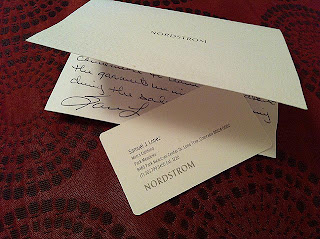 And them Samuel J. Lopez came into my life. I bought a new suit from Sam at Nordstrom some months ago. It was fine, great service, great communication as expected blah blah blah. But the awkward part came later when Sam sent me a handwritten thank you note and his business card. Again please ... h-a-n-d-w-r-i-t-t-e-n thank you note (printed on embossed paper, metallic ink and real ball point pen on the inside). The business card was also impressive. No digitally quick-printed crappy temporary card but a foil stamped legit calling card with rounded corners.
I scanned the thank you note, then went to add the card to my binder-clipped stack of to-be-entered-into-my-address-book (maybe) cards when to my horror, I saw there was no email address. Only a phone number. A single phone number with Sam's extension. I paused, "what the hell am I going to do with this?" Bottleneck in my day.
I knew Sam had entered my email address into Nordstrom's CRM system, evidenced by the weekly ads in my inbox. But Sam himself has only communicated old school. Once by phone (to follow up two months later to see how the suit was fitting and if I needed any additional complimentary alterations) and twice by snail mail (aforementioned thank you card and a hand written invitation to a private rack sale).
I kept the business card. I don't plan on calling Sam but after the initial shock of the card's lack of email address, Twitter logo, Facebook logo, LinkedIn logo et al, it eventually gave me sense of calm and put me in control of this seemingly unimportant customer service relationship. Sam hasn't added a subconscious straw to my neurotic camel's back with the feeling he will ever email me something I don't want. The genuine nature of the card's contents doesn't carry any urgency and will never make me feel like I have to DO something.
As marketers, we strive to create these exact feelings and we desperately try to create similar interactions with every touchpoint. And how many people do you know that are secure enough not to tip the design balance of their business cards by junking it up with every keeping-up-with-Jones form of contact available in today's pay attention to me business environment?
Sam knows he doesn't have to do this. How refreshingly awkward.
 And them Samuel J. Lopez came into my life. I bought a new suit from Sam at Nordstrom some months ago. It was fine, great service, great communication as expected blah blah blah. But the awkward part came later when Sam sent me a handwritten thank you note and his business card. Again please ... h-a-n-d-w-r-i-t-t-e-n thank you note (printed on embossed paper, metallic ink and real ball point pen on the inside). The business card was also impressive. No digitally quick-printed crappy temporary card but a foil stamped legit calling card with rounded corners.
 I scanned the thank you note, then went to add the card to my binder-clipped stack of to-be-entered-into-my-address-book (maybe) cards when to my horror, I saw there was no email address. Only a phone number. A single phone number with Sam's extension. I paused, "what the hell am I going to do with this?" Bottleneck in my day.
I knew Sam had entered my email address into Nordstrom's CRM system, evidenced by the weekly ads in my inbox. But Sam himself has only communicated old school. Once by phone (to follow up two months later to see how the suit was fitting and if I needed any additional complimentary alterations) and twice by snail mail (aforementioned thank you card and a hand written invitation to a private rack sale).
I kept the business card. I don't plan on calling Sam but after the initial shock of the card's lack of email address, Twitter logo, Facebook logo, LinkedIn logo et al, it eventually gave me sense of calm and put me in control of this seemingly unimportant customer service relationship. Sam hasn't added a subconscious straw to my neurotic camel's back with the feeling he will ever email me something I don't want. The genuine nature of the card's contents doesn't carry any urgency and will never make me feel like I have to DO something.
As marketers, we strive to create these exact feelings and we desperately try to create similar interactions with every touchpoint. And how many people do you know that are secure enough not to tip the design balance of their business cards by junking it up with every keeping-up-with-Jones form of contact available in today's pay attention to me business environment?
Sam knows he doesn't have to do this. How refreshingly awkward.
Wednesday, October 27, 2010
Involving Residents In Your Worth Cause
Many companies contribute to charitable causes and the greater good, and some (wisely) share their philanthropic endeavors with their clients. But why stop there?
In The Buying Brain, Secrets for Selling to the Subconscious Mind, (yes I did like this book as this is my second post referencing it ), Dr. A.K. Pradeep notes that coupons that include an act of charity can produce a significant rise in Purchase Intent and self worth. In one study, consumers were asked to choose one of four deserving causes to receive a percentage of what they spent. This simple gesture resulted in a huge increase in emotional engagement and higher Deep Subconscious response scores for words relating to the “pleasure” or “satisfaction” associated with the shopping experience.
Contributing to charitable causes in a way that includes residents is an easily adaptable concept at the on-site level. For example, perhaps a community selects three charities, (since the business is multifamily, possibilities might include Habitat for Humanity, a local homeless or transitional shelter and other causes that relate to housing or “get back on your feet” support - make sure to run your selections by HR), and determines a percentage of the first month of resident’s rent that will be donated to the selected charity. When the resident renews their lease, (or signs the initial lease), they are asked to select which organization they would like the money to go to - they get to control it. If they say, “None - can you just reduce my rent?” (which they most likely won’t if presented effectively), you can politely decline and re-emphasize that the rent is the rent, however XYZ Apartments is committed to donating a percentage of that rent to a charitable organization that helps those less fortunate and we let our residents choose which of the three charities they would like it contributed to.
A program like this is broad enough to encompass point of initial sale and resale (renewal) strategies. Community charitable donations might be tracked on the website, Facebook page, clubhouse visuals, etc. Even better, expand the program and provide opportunities for residents to volunteer at these causes. The possibilities are endless...and all good.
What does your company or community do for the greater good? Do you let your residents know? Do you involve them in the process?
In The Buying Brain, Secrets for Selling to the Subconscious Mind, (yes I did like this book as this is my second post referencing it ), Dr. A.K. Pradeep notes that coupons that include an act of charity can produce a significant rise in Purchase Intent and self worth. In one study, consumers were asked to choose one of four deserving causes to receive a percentage of what they spent. This simple gesture resulted in a huge increase in emotional engagement and higher Deep Subconscious response scores for words relating to the “pleasure” or “satisfaction” associated with the shopping experience.
Contributing to charitable causes in a way that includes residents is an easily adaptable concept at the on-site level. For example, perhaps a community selects three charities, (since the business is multifamily, possibilities might include Habitat for Humanity, a local homeless or transitional shelter and other causes that relate to housing or “get back on your feet” support - make sure to run your selections by HR), and determines a percentage of the first month of resident’s rent that will be donated to the selected charity. When the resident renews their lease, (or signs the initial lease), they are asked to select which organization they would like the money to go to - they get to control it. If they say, “None - can you just reduce my rent?” (which they most likely won’t if presented effectively), you can politely decline and re-emphasize that the rent is the rent, however XYZ Apartments is committed to donating a percentage of that rent to a charitable organization that helps those less fortunate and we let our residents choose which of the three charities they would like it contributed to.
A program like this is broad enough to encompass point of initial sale and resale (renewal) strategies. Community charitable donations might be tracked on the website, Facebook page, clubhouse visuals, etc. Even better, expand the program and provide opportunities for residents to volunteer at these causes. The possibilities are endless...and all good.
What does your company or community do for the greater good? Do you let your residents know? Do you involve them in the process?
Monday, October 11, 2010
Are You a Bust With Boomers?
Is Your Marketing a Bust With Boomers?
In “The Buying Brain - Secrets for Selling to the Subconscious Mind” Dr. A.K. Pradeep cites a study conducted by Dr. Adam Gazzaley that determined the ability for one’s mind to suppress distractions declines with age. People over 60 aren’t necessarily more forgetful; rather, they are more overwhelmed by distraction. Hmmm…
Based on this finding, the book suggests easy strategies for marketing products to older adults. First and foremost, keep the message obvious and direct and copy and images clean and uncluttered. Let the message “breathe" with some white space around it, and avoid the impulse to load up messages with sounds, running screens, and quick-time animations. Not only are distractions detracting from your message to seniors, most of that content is not even making it past the brain “filters’ of Boomer consumers. In other words, what teens will enjoy, Grandma won’t.
In addition, Boomers like positive messaging - wit and wisdom speak their language, and their broader attention spans make them more comfortable with knowing more than the headline and will recall and puut into context messaging that honors their cognitive abilities and hard-won experience.
Boomers control 77% of all financial assets in the United States, and they’re getting older every day.
Is your message getting through to them?
In “The Buying Brain - Secrets for Selling to the Subconscious Mind” Dr. A.K. Pradeep cites a study conducted by Dr. Adam Gazzaley that determined the ability for one’s mind to suppress distractions declines with age. People over 60 aren’t necessarily more forgetful; rather, they are more overwhelmed by distraction. Hmmm…
Based on this finding, the book suggests easy strategies for marketing products to older adults. First and foremost, keep the message obvious and direct and copy and images clean and uncluttered. Let the message “breathe" with some white space around it, and avoid the impulse to load up messages with sounds, running screens, and quick-time animations. Not only are distractions detracting from your message to seniors, most of that content is not even making it past the brain “filters’ of Boomer consumers. In other words, what teens will enjoy, Grandma won’t.
In addition, Boomers like positive messaging - wit and wisdom speak their language, and their broader attention spans make them more comfortable with knowing more than the headline and will recall and puut into context messaging that honors their cognitive abilities and hard-won experience.
Boomers control 77% of all financial assets in the United States, and they’re getting older every day.
Is your message getting through to them?
Tuesday, August 3, 2010
Run, Run Retention!


Need an easy resident retention idea? Create a Saturday morning runner’s club for the kids. The school in our neighborhood hosts a before school runner’s club three days a week in preparation for a local Fitness Festival, which the kids may or may not participate in. Mostly, the idea is to encourage fitness by running a quarter mile track and receiving medallions for every lap they cover. They proudly wear the medallions and compare who’s got more, etc. The runner’s club is hugely popular and has been featured on local news channels. I would venture to say that over 125 people participated this morning alone. What a great opportunity to develop and encourage community.
Here’s how to do it at your community;
First, tell the kids it’s coming. Build it up. Create a special newsletter insert about healthy choices just for them. Do a countdown sign at the school bus stop. Make sure they see it and can get excited about it.
Get a goal. Let the kids know they are training for something bigger, perhaps a 5K or local fitness event. Or, you might elect to throw a party at the end for those who participate.
Display progress. Cheap trinkets that the kids can wear (in our case rubber feet charms on a 24 inch chain - go to Oriental Trading Company for ideas ) will create a sense of belonging and competitiveness. If you have enough money, give each participant plastic or aluminum water bottles featuring your community logo.
Research mileage trackers like Map My Run and mark off 1/4 mile markers at your community. This can be in an open area, or you can measure by distance around and through your property. Just make sure you define a full lap so the kids know how far they have gone. Make sure somebody is at the mile marker to physically track progress.
Get some parents involved. You will need the help. A good avenue would be to approach parents that regularly utilize your fitness facility, since they understand the importance of lifelong fitness.
Tell the kids to invite their friends to join them (and get some outreach marketing done in the process).
Create a large visual for your office or clubhouse to show the community’s progress.
Make sure to do “Don’t forget - Runner’s Club starts this Saturday” door hangers or reminders and let the parents know they don’t have to just stand on the sidelines - they can participate too. After the first, keep sending out reminders about the Saturday Runner’s Club. Let the kids know they are welcome at any time. Let the parents know they can run (or walk) too.
If your program generates a large crowd, let the press know and encourage them to do a story.
If the program is very successful, consider adding a mid-week late afternoon option.
Run the training program for approximately 2 months. If you are electing to do a 5K at the end, don’t forget the marketing! T shirts displaying your logo and a catchy tag line will get noticed (and help you keep track of everyone).
There are a myriad of different avenues a program like this can head. The most important thing is to get up, get going and get busy!
Monday, July 26, 2010
Are You The Real Deal?
While vacationing recently in Wisconsin's Northwoods, we headed out on our annual trek to dine in one of the area's infamous "supper clubs". For those unfamiliar to just what exactly a "supper club" is, let me clarify. A supper club serves supper. And cocktails. And usually sports a sign at the entrance reminiscent of an early 60's motif, that many times features a martini. On Fridays, a fish fry is served. I couldn't wait.
We decided on a place called "The Red Man". Not much to look at, but the parking lot was full. Always a good sign on a Friday night. The inside wasn't real chic either, but it was full of people. Tables were free of cloth, and of the kind you drag out when you have extended family arrive for Thanksgiving. Each place setting featured a paper place mat and a large plastic bowl. The hostess took our names, and said, "OK. It's going to be about 30 minutes. I want you to get a drink and go out on the back patio and I will come get you when your table is ready." So. we did what she said.
After 25 minutes, the hostess stuck her head out the door and said, "Come on, your table is ready!" and we were seated. The bread came with the customary breadsticks and horseradish cheese. Delicious. Then came the salad. We could barely lift it. Bounty at its best.

A definite Red Man signature. The whole meal was fabulous. Our waitress Terri, was attentive, in charge, and kept the food coming.
My husband looked at me and said, "The place isn't much to look at, but it sure is the real deal." And it was.
So other than fond vacation memories, what's the point?
Here's the thing - The Red Man didn't have an outstanding entrance, lovely interior appointments or even cloth linens. Yet, the place was packed and our impression was positive. The Red Man visually under-promised and then over-delivered. It's like that one community in your neighborhood that you can't quite figure out. Not real glamourous, no over the top amenities, but everything is clean, friendly, and they're always full and raising rents. Simplistic, honest and committed to delivering the way the residents like it. The real deal.
If your community is an under-performer in the looks department, find a way to wow (What's your signature salad?) and focus on delivering consistently and excellently.
We decided on a place called "The Red Man". Not much to look at, but the parking lot was full. Always a good sign on a Friday night. The inside wasn't real chic either, but it was full of people. Tables were free of cloth, and of the kind you drag out when you have extended family arrive for Thanksgiving. Each place setting featured a paper place mat and a large plastic bowl. The hostess took our names, and said, "OK. It's going to be about 30 minutes. I want you to get a drink and go out on the back patio and I will come get you when your table is ready." So. we did what she said.
After 25 minutes, the hostess stuck her head out the door and said, "Come on, your table is ready!" and we were seated. The bread came with the customary breadsticks and horseradish cheese. Delicious. Then came the salad. We could barely lift it. Bounty at its best.

A definite Red Man signature. The whole meal was fabulous. Our waitress Terri, was attentive, in charge, and kept the food coming.
My husband looked at me and said, "The place isn't much to look at, but it sure is the real deal." And it was.
So other than fond vacation memories, what's the point?
Here's the thing - The Red Man didn't have an outstanding entrance, lovely interior appointments or even cloth linens. Yet, the place was packed and our impression was positive. The Red Man visually under-promised and then over-delivered. It's like that one community in your neighborhood that you can't quite figure out. Not real glamourous, no over the top amenities, but everything is clean, friendly, and they're always full and raising rents. Simplistic, honest and committed to delivering the way the residents like it. The real deal.
If your community is an under-performer in the looks department, find a way to wow (What's your signature salad?) and focus on delivering consistently and excellently.
Tuesday, June 22, 2010
Keep It Short
I received a request to complete a survey today regarding my experience for a one night hotel visit earlier this month. It was the second request I received, and I figured since they asked twice, I would go ahead and complete it. When I clicked the link, I was informed the survey would take me from 7 to 10 minutes to complete. I clicked back off.
If you want feedback, keep it short, and in context with the experience. I don’t have time to spend a quarter of an hour, or a coffee break, or the time it takes me to write this blog, to complete a survey regarding a one night visit. Now, if the survey took 3, or even 5 minutes or less to complete, or I was offered something in return for my time, I would have happily complied.
Keep it simple. Ask relevant questions that provide insight, and most of all, respect your customer's time by keeping it short.
If you want feedback, keep it short, and in context with the experience. I don’t have time to spend a quarter of an hour, or a coffee break, or the time it takes me to write this blog, to complete a survey regarding a one night visit. Now, if the survey took 3, or even 5 minutes or less to complete, or I was offered something in return for my time, I would have happily complied.
Keep it simple. Ask relevant questions that provide insight, and most of all, respect your customer's time by keeping it short.
Friday, June 4, 2010
Drive Your Plants Up The Wall


Trendcentral reported this week on new products to bring the outdoors in and I about flipped my lid over a new modular planter system called Woolly Pocket Wally. With this device you can create an indoor plant wall - just think about how cool this would look on that wall you don’t know what to do with in your office, or how easily you could spice up a model by hanging one of these in the kitchen and planting basil in it. (Get it, spice up?)
Prices start at $49, which is far cheaper than most art.
While you’re at the site, check out the garden systems designed for schools. Pretty fabulous.
Friday, April 16, 2010
Get Results By Keeping It Simple
The Marketing Profs newsletter reported this week on a recent Neuromarketing blog regarding typeface and likelihood of customers to provide the information you seek. In the blog, Roger Dooley writes, “you will be more successful if you describe the task in a simple, easy to read typeface.” he reasons that when something can be completed in a shorter amount of time, people are more likely to comply with the request - and less complex fonts create the impression that it will go more quickly.
Dooley cites research by Hyunjin Song and Norbert Schwarz, who asked two groups to estimate the amount of time required for identical exercise regimens. The first group read instructions in Arial—a simple, streamlined font:

The second group viewed a more complex, brush font:
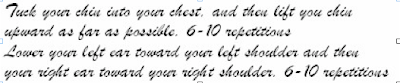
Guess which group estimated the regimen would take longer? Winner, winner chicken dinner to those who guessed the second - 15.1 minutes vs. 8.2 minutes for the first regimen.
The moral of the story, of course, is to keep it simple. Not just in what you say, but in the way you say it. Complicated fonts mean complicated process to the consumer. The less time they perceive they need to spend, the more likely you will be to get them to sign up.
Dooley cites research by Hyunjin Song and Norbert Schwarz, who asked two groups to estimate the amount of time required for identical exercise regimens. The first group read instructions in Arial—a simple, streamlined font:

The second group viewed a more complex, brush font:


Guess which group estimated the regimen would take longer? Winner, winner chicken dinner to those who guessed the second - 15.1 minutes vs. 8.2 minutes for the first regimen.
The moral of the story, of course, is to keep it simple. Not just in what you say, but in the way you say it. Complicated fonts mean complicated process to the consumer. The less time they perceive they need to spend, the more likely you will be to get them to sign up.
Thursday, April 8, 2010
Ready, AIM, Strategize!
I know income streams aren’t exactly what they used to be, but the AIM Conference (Apartment Internet Marketing) is just around the corner, and if you market apartments at any level, it’s time you made your plans to attend.
There’s not a whole lot of fluff and fanfare at this conference, just quality, high level information that is about as forward-thinking as it gets. If you are involved with, or want to know about what is coming next in the world of Internet apartment marketing, this is the conference for you. Great minds attend this conference for insight - minds I know and respect, and often turn to for advice. You won’t be sorry. Plus it’s in Huntington Beach, for Pete’s sake. I can’t think of a better place to hold a conference.
Need a deal sweetener? I have finagled a discount for you. Book by April 20th, use the code aim2010snider, and get $50 off your registration.
Get going and get registered. I’ll see you there.
There’s not a whole lot of fluff and fanfare at this conference, just quality, high level information that is about as forward-thinking as it gets. If you are involved with, or want to know about what is coming next in the world of Internet apartment marketing, this is the conference for you. Great minds attend this conference for insight - minds I know and respect, and often turn to for advice. You won’t be sorry. Plus it’s in Huntington Beach, for Pete’s sake. I can’t think of a better place to hold a conference.
Need a deal sweetener? I have finagled a discount for you. Book by April 20th, use the code aim2010snider, and get $50 off your registration.
Get going and get registered. I’ll see you there.
Monday, February 15, 2010
Design vs. Creativity
Multifamily marketers often use the terms "design" and "creativity" interchangeably, when in fact, they are very different. Complementary certainly, but different.
Good design is taught, studied and consistently implemented. Creativity is inherently maverick.
Design is about flow, alignment, spacing and relevance. Print design considers readability and font choice, web design is measured by usability and flatness, and interior design is grounded in the science of environment and space. It's a competency.
Creativity on the other hand is ultimately subjective. When you see an ad or a T.V. commercial and think, "I wish I would have thought of that," your envy is rooted in creativity. Creativity is how well you solve a specific problem for a specific person using specific parameters.
So should your marketing be creative or well designed? Differentiate your community by flexing your creativity muscle when given the opportunity, but don't expect all of your outreach will be creative. Stock photography is not creative. Neither are metaphor concepts or balloons on monument signs. Creativity is an effective resident retention program, and unique move-in promotion and flexing your policies to allow for customized rent payments.
Good design is mandatory, and should be evident in everything you produce, both online and offline. Design should speak to your target resident, and should carry the tone of your community or company. For example, 3D floor plans may seem creative, but they borderline on poor design because they're often difficult to understand. (apartment renters look at floor plans once a year vs. those of us in the industry who see them everyday) Most locator magazines and web sites are void of creativity, but their design allows for efficient consumption of large amounts of data that whether you like it or not, needs to be compared.
Most importantly, design allow people interact with it; and is neither creative nor effective if it doesn't sell.

Illustration Via Illustrator and Graphic Designer Frank Chimero
Good design is taught, studied and consistently implemented. Creativity is inherently maverick.
Design is about flow, alignment, spacing and relevance. Print design considers readability and font choice, web design is measured by usability and flatness, and interior design is grounded in the science of environment and space. It's a competency.
Creativity on the other hand is ultimately subjective. When you see an ad or a T.V. commercial and think, "I wish I would have thought of that," your envy is rooted in creativity. Creativity is how well you solve a specific problem for a specific person using specific parameters.
So should your marketing be creative or well designed? Differentiate your community by flexing your creativity muscle when given the opportunity, but don't expect all of your outreach will be creative. Stock photography is not creative. Neither are metaphor concepts or balloons on monument signs. Creativity is an effective resident retention program, and unique move-in promotion and flexing your policies to allow for customized rent payments.
Good design is mandatory, and should be evident in everything you produce, both online and offline. Design should speak to your target resident, and should carry the tone of your community or company. For example, 3D floor plans may seem creative, but they borderline on poor design because they're often difficult to understand. (apartment renters look at floor plans once a year vs. those of us in the industry who see them everyday) Most locator magazines and web sites are void of creativity, but their design allows for efficient consumption of large amounts of data that whether you like it or not, needs to be compared.
Most importantly, design allow people interact with it; and is neither creative nor effective if it doesn't sell.

Illustration Via Illustrator and Graphic Designer Frank Chimero
Thursday, January 7, 2010
If Your Community Were an Album, How Would You Sell It?
I read with interest a recent USA Today article on the new Susan Boyle CD, Dream. Despite being released in November, it has shattered numerous sales records and is the top selling release for 2009. I personally purchased one for my mother-in-law, and she for her friend. Marketed aggressively in a campaign that didn’t play by the rules, rather, was promoted almost exclusively through word of mouth, TV and the Internet, it became the must-have gift of the season.
A CD. Aren’t CD’s supposed to be dead? Isn’t the new word “download”? Here’s the thing: in an age in which digital is all the word, there are still people (and based on Dream sales, plenty of them) that don’t own an MP3 or IPod and don’t have the first idea how to download Itunes. They own CD players, and would value the gift of a CD by an artist they enjoy hearing. Antiquated they may be, but they have money to spend, and loved ones who will spend on them. While everyone else was going digital, Dream was marketed almost exclusively through word of mouth, TV and the Internet. Labels are recognizing each album is unique and tailoring campaigns accordingly.
As a lesson for our business, take a look at your desired consumer. Analyze how they buy, and what they desire, and develop a campaign that speaks to them. Should a new One Republic album be marketed the same as Susan Boyle? No. Different strokes for different folks. Don’t get so caught up in the rules that you miss a market that is right there, ready to buy.
A CD. Aren’t CD’s supposed to be dead? Isn’t the new word “download”? Here’s the thing: in an age in which digital is all the word, there are still people (and based on Dream sales, plenty of them) that don’t own an MP3 or IPod and don’t have the first idea how to download Itunes. They own CD players, and would value the gift of a CD by an artist they enjoy hearing. Antiquated they may be, but they have money to spend, and loved ones who will spend on them. While everyone else was going digital, Dream was marketed almost exclusively through word of mouth, TV and the Internet. Labels are recognizing each album is unique and tailoring campaigns accordingly.
As a lesson for our business, take a look at your desired consumer. Analyze how they buy, and what they desire, and develop a campaign that speaks to them. Should a new One Republic album be marketed the same as Susan Boyle? No. Different strokes for different folks. Don’t get so caught up in the rules that you miss a market that is right there, ready to buy.
Monday, January 4, 2010
Are You Talking About You...Or Talking To Them?
I have blogged numerous times about the power of powerful copy, but until now, have not been able to provide resources, (other than hiring a copywriter), that will assist you in preparing more powerful and compelling messages geared toward the consumer, rather than about you or your property. In other words, making it about them, and not about you. (If you have ever had a friend or colleague that can't stop talking about themselves, you know what I am saying here. They rarely understand what a true turn-off they are.)
Future Now offers a WeWe calculator that will help you discover what your word choices say about where your focus really is, and provides a sense of the impression you are making on clients. The tool won't make you a powerful copywriter, but it will allow you to see whether your messages are about the client...or about you. I tested 10 random apartment sites, and not one scored above a 46% in utilizing customer-focused words in their messaging. In other words, every community talked more about themselves using words like "I", "we", "our", and company name (just like a "we"), than they used words like "you" and "your". According to the tool's inventor, there seems to be a clear difference in the clients that score above 60%. That said, other influences can have an effect on your copy,and it's not always what you say, but how you say it, so use the tool simply as a fun exercise in seeing your words through the client eyes.
Have fun. Test each part of your site. Then, take a close look at your text, and make whatever changes you need to make to ensure your visitors feel your only focus is their satisfaction. If you want the consumer to perceive that you are focused on them, talk about them, their needs, their wants, and how they can get those needs and wants satisfied. Make it more about them...and less about you.
Future Now offers a WeWe calculator that will help you discover what your word choices say about where your focus really is, and provides a sense of the impression you are making on clients. The tool won't make you a powerful copywriter, but it will allow you to see whether your messages are about the client...or about you. I tested 10 random apartment sites, and not one scored above a 46% in utilizing customer-focused words in their messaging. In other words, every community talked more about themselves using words like "I", "we", "our", and company name (just like a "we"), than they used words like "you" and "your". According to the tool's inventor, there seems to be a clear difference in the clients that score above 60%. That said, other influences can have an effect on your copy,and it's not always what you say, but how you say it, so use the tool simply as a fun exercise in seeing your words through the client eyes.
Have fun. Test each part of your site. Then, take a close look at your text, and make whatever changes you need to make to ensure your visitors feel your only focus is their satisfaction. If you want the consumer to perceive that you are focused on them, talk about them, their needs, their wants, and how they can get those needs and wants satisfied. Make it more about them...and less about you.
Wednesday, December 16, 2009
Why You Should Get On Zillow Today
Zillow, one of the largest real estate websites, launched their rentals products division this week, and I must say, the opportunities for exposure, especially right now, are pretty good, mostly because there are very few listings. Given the popularity of the site and the fact that finally, companies are noticing the potential of having real estate sales and rentals play in the same sandbox, I expect that will change. The site offers the industry’s first mapped search by monthly payment, which allows shoppers to simultaneously find for-sale and for-rent homes, based on a monthly payment they can afford. With the appeal of home ownership and its appreciation benefits waning, it stands to reason that increasingly, some consumers will care more about price and location than whether the property is for sale or lease, and when comparing benefits, may elect to lease.
According to their website, the cost is just 9.95 per listing for 180 days to reach 8.3 million people every month, including a million renters and many others who are on the fence over whether to buy or to rent.
For $9.95, it’s a no-brainer. Lease one apartment and you’ve generated quite a return. If you lease nothing, you’re out 10 bucks. Get on Zillow today.
According to their website, the cost is just 9.95 per listing for 180 days to reach 8.3 million people every month, including a million renters and many others who are on the fence over whether to buy or to rent.
For $9.95, it’s a no-brainer. Lease one apartment and you’ve generated quite a return. If you lease nothing, you’re out 10 bucks. Get on Zillow today.
Monday, December 7, 2009
Top Gripes
A recent Consumer Reports article on what bugs America most, reveals that Hidden fees and Not getting a human on the phone are the top gripes today. The survey of 1,125 Americans, asked respondents to score gripes on a 1 to 10 scale, 1 meaning "does not annoy you at all", and 10 meaning "it annoys you tremendously".
Hidden fees scored an average of 8.9, and Not getting a human on the phone 8.6.
In other words, both really tick people off.
Yet, on any given day, we can call a community (or company, suppliers this is for you too), and get a long winded answering machine that is anything but human, then be presented with things like "non refundable lease processing fees" that really don't clearly explain what exactly they pay for.
In my consulting practice, I see professionals spinning their wheels and lamenting over lack of traffic, yet disregarding easy fixes right in front of them.
Utilize a service like Level One as backup to ensure calls do not got to voice mail - that a live human always answers the phone.
Simplify your fees. Consider what it's worth - in an economy such as ours we can't afford the perception we are gouging the client. When people are worried about every penny, they will not overlook the "fees" and will assume you are trying to take advantage of them. There is a general distrust of business today. Don't affirm it. Find another way. Either incorporate it into the rent or, if vacancy warrants, stop charging the fee - don't waive it, as it is still, to the consumer, a "shady" fee.
Get back to the basics. Are clients easily able to reach you? Are you fair in your practices? Can you logically explain all your fees and specifically why you charge them?
Then ask your residents a really tough question: "What really annoys you about doing business with us?" You might find it's an easy fix. Or, maybe not. Either way, you need to know.
Hidden fees scored an average of 8.9, and Not getting a human on the phone 8.6.
In other words, both really tick people off.
Yet, on any given day, we can call a community (or company, suppliers this is for you too), and get a long winded answering machine that is anything but human, then be presented with things like "non refundable lease processing fees" that really don't clearly explain what exactly they pay for.
In my consulting practice, I see professionals spinning their wheels and lamenting over lack of traffic, yet disregarding easy fixes right in front of them.
Utilize a service like Level One as backup to ensure calls do not got to voice mail - that a live human always answers the phone.
Simplify your fees. Consider what it's worth - in an economy such as ours we can't afford the perception we are gouging the client. When people are worried about every penny, they will not overlook the "fees" and will assume you are trying to take advantage of them. There is a general distrust of business today. Don't affirm it. Find another way. Either incorporate it into the rent or, if vacancy warrants, stop charging the fee - don't waive it, as it is still, to the consumer, a "shady" fee.
Get back to the basics. Are clients easily able to reach you? Are you fair in your practices? Can you logically explain all your fees and specifically why you charge them?
Then ask your residents a really tough question: "What really annoys you about doing business with us?" You might find it's an easy fix. Or, maybe not. Either way, you need to know.
Subscribe to:
Posts (Atom)

 Posts
Posts

